Back to articles
FITSPA Hosts Sector Forum on Crypto and Virtual Assets to Discuss the State and Future of Virtual Assets in Uganda


On Thursday, 9th July 2026, the Financial Technology Service Providers Association (FITSPA) convened the Sector Forum on Crypto & Virtual Assets at Protea Hotel, Kololo, under the theme, "The State and Future of Crypto & Virtual Assets in Uganda." The Forum brought together regulators, policymakers, financial institutions, fintech companies, Virtual Asset Service Providers (VASPs), innovators, development partners, tax authorities, academia, and other ecosystem stakeholders to explore Uganda's rapidly evolving virtual asset landscape. The event provided a timely platform for dialogue on innovation, regulation, financial integrity, taxation, consumer protection, and the future of virtual assets in Uganda.
The Forum was organised at a time when virtual asset adoption in Uganda continues to accelerate. According to Uganda's National Money Laundering and Terrorism Financing Risk Assessment on Virtual Assets and Virtual Asset Service Providers, Uganda's global virtual asset adoption ranking improved from 100th in 2022 to 34th in 2024, while the country ranked 18th globally for peer-to-peer exchange activity. These developments underscore the growing role of virtual assets in Uganda's digital economy and the need for a balanced approach that supports innovation while safeguarding the financial system.
Opening Remarks: Fostering Collaboration for Responsible Innovation

In her opening remarks, FITSPA Vice Chairperson, Doreen Lukandwa, welcomed participants and noted that virtual assets are no longer an emerging concept but an increasingly important component of Uganda's digital financial ecosystem. She observed that as adoption continues to grow, so too does the responsibility of regulators, policymakers, innovators, financial institutions, and industry players to work collaboratively in shaping a secure and enabling environment. She emphasized that the Forum was intended to foster informed discussions, build a shared understanding of the opportunities and risks within the sector, and contribute to evidence-based policy conversations that will shape Uganda's virtual asset ecosystem.
Uganda's National Risk Assessment Highlights the Regulatory Imperative
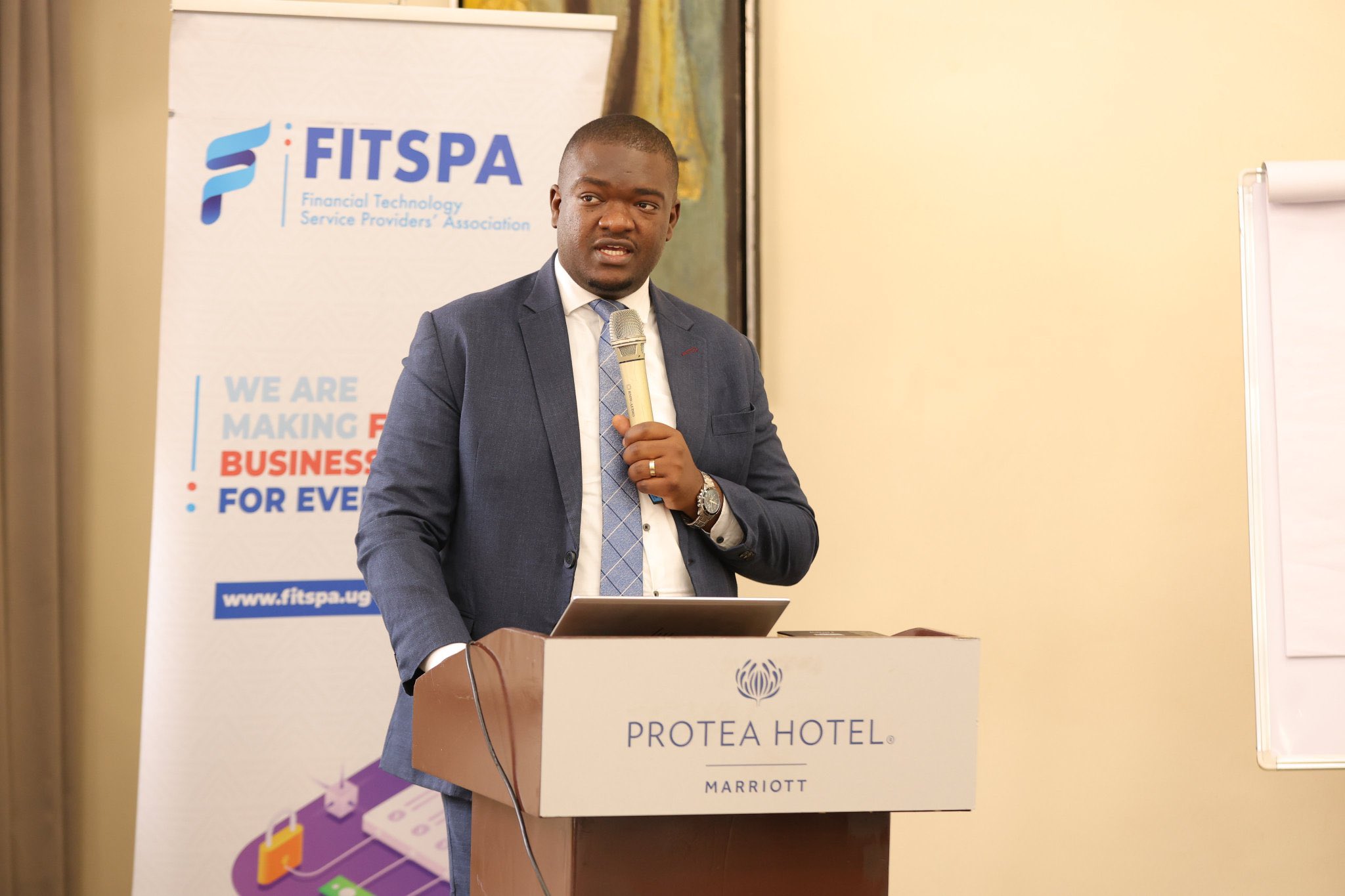
The keynote technical presentation was delivered by Edward Amanyire, Manager – Strategic Analysis at the Financial Intelligence Authority (FIA), who presented findings from Uganda's first National Money Laundering and Terrorism Financing Risk Assessment on Virtual Assets and Virtual Asset Service Providers. The assessment concluded that Uganda currently faces an overall high money laundering and terrorist financing risk within the virtual asset sector, largely because adoption has expanded in the absence of a dedicated regulatory framework governing Virtual Asset Service Providers. While measures introduced by the Bank of Uganda have helped limit exposure to virtual assets within the formal financial sector, the assessment noted that these measures have also contributed to the growth of an active peer-to-peer market operating largely outside direct regulatory oversight.
A key takeaway from the presentation was that a high-risk assessment should not be interpreted as a call to halt innovation. Rather, it should serve as a call to govern innovation responsibly through proportionate regulation, stronger anti-money laundering and counter-terrorism financing controls, improved customer due diligence, enhanced collaboration between public and private institutions, and increased public awareness. The assessment recommended establishing a licensing framework for Virtual Asset Service Providers while strengthening supervisory mechanisms that protect consumers and preserve the integrity of Uganda's financial system.
Panel Discussions Explored Regulation, Innovation and Real-World Applications
The Forum featured two interactive panel discussions that examined both the regulatory landscape and the practical opportunities presented by virtual assets.

The first panel discussion, moderated by Doreen Lukandwa, focused on market activity, risks, policy, and regulation. Panelists Edward Amanyire (Financial Intelligence Authority), Dennis Kizito (Capital Markets Authority), and Suleiman Murunga (MUDA) explored Uganda's current regulatory position, financial integrity risks, consumer protection considerations, and the future of virtual asset regulation. Panelists agreed that regulation should primarily focus on Virtual Asset Service Providers rather than the underlying blockchain technology itself, allowing innovation to flourish while ensuring adequate safeguards against financial crime and consumer harm. They also discussed the ongoing Regulatory Impact Assessment being undertaken by Government and highlighted the importance of regulatory sandboxes, coordinated oversight, and continuous stakeholder engagement.

The second panel discussion, moderated by Flavia Eleanor Kasenge, shifted attention to practical use cases and opportunities within the virtual asset ecosystem. Panelists Isaac Wabuge (Yellow Card Financial), Wensi Nuwagaba (BrainWave Technologies), and Ian Mubiru (Relworx) challenged the common perception that virtual assets are purely speculative investments. They highlighted applications such as cross-border payments, remittances, settlements, treasury management, and financial inclusion through stablecoins. The discussion encouraged Uganda to position itself not only as a consumer of blockchain technologies but also as a producer of locally developed solutions capable of addressing African challenges. Lessons from countries such as Kenya, South Africa, and Nigeria demonstrated that regulatory clarity, combined with support for responsible innovation, can unlock significant economic opportunities.

Tax Compliance Remains a Key Pillar of the Ecosystem

The Forum concluded with a General Tax Education Session facilitated by the Uganda Revenue Authority (URA). The presenters explained that cryptocurrencies are currently treated as taxable assets rather than legal tender under Uganda's tax framework. Participants received guidance on the tax implications of trading, exchanging, holding, and investing in virtual assets and were encouraged to maintain proper transaction records and comply with existing tax obligations. The session reinforced the growing importance of tax compliance as Uganda's digital asset ecosystem continues to expand.
Looking Ahead

The Sector Forum successfully achieved its objective of fostering constructive dialogue and building a shared understanding of Uganda's evolving virtual asset ecosystem. By bringing together regulators, innovators, policymakers, financial institutions, tax authorities, development partners, and industry stakeholders, the Forum created an important platform for exchanging perspectives and identifying practical pathways for responsible innovation. As Uganda continues to embrace digital financial technologies, FITSPA remains committed to convening multi-stakeholder engagements that inform policy, strengthen collaboration, promote responsible innovation, and contribute to building a trusted, secure, and globally competitive fintech and virtual assets ecosystem.

FITSPA extends its sincere appreciation to all speakers, moderators, panelists, partners, and participants whose valuable contributions made the Forum a success. Together, through continued collaboration and evidence-based dialogue, Uganda can build a virtual asset ecosystem that supports innovation, protects consumers, strengthens financial integrity, and drives inclusive digital economic growth.